
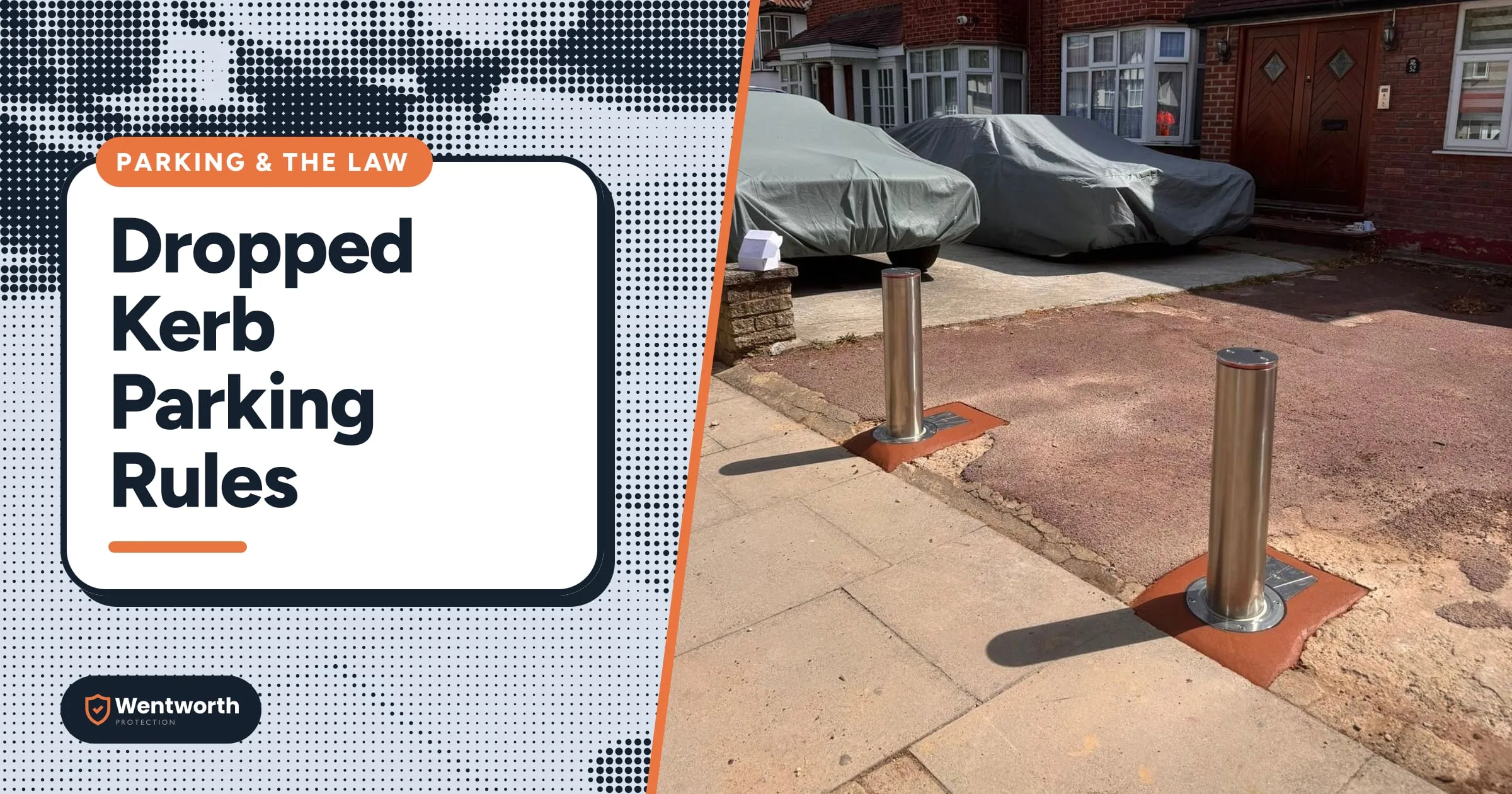
You must not park on the road next to a dropped kerb where the council enforces parking: under section 86 of the Traffic Management Act 2004 it’s a parking contravention, and you can get a penalty charge notice. The main exception is the person who lives there, or someone they’ve allowed, as long as the driveway isn’t shared. Here’s what the Highway Code and the law say, and what it costs.
What the Highway Code says (rule 243)
Rule 243 of the Highway Code lists places where you should not stop or park. It says “DO NOT stop or park”, then includes:
“where the kerb has been lowered to help wheelchair users and powered mobility vehicles”
“in front of an entrance to a property”
Rule 243 says “DO NOT” rather than “MUST NOT”, so on its own it’s advice, though advisory rules can be used in evidence in court. The law that lets councils issue tickets is section 86.
What the law says: section 86
Section 86 of the Traffic Management Act 2004 applies in England and Wales wherever the council runs civil parking enforcement. A vehicle must not be parked on the road next to a pavement, cycle track or verge lowered to help:
pedestrians cross the road,
cyclists get on or off the road, or
vehicles get on or off the road across the pavement.
Parking includes waiting, so sitting in the car doesn’t make it allowed. No yellow line or white H-bar is needed: Surrey County Council says a car can be ticketed whether or not there’s a marking.
The exceptions
Parking wholly inside a marked bay, or where parking is specifically allowed.
Parking outside a home by the occupier, or with their consent, as long as the consent isn’t paid for. This doesn’t apply to a shared driveway.
Fire, police and ambulance vehicles.
Deliveries and loading that can’t reasonably be done another way, for no more than 20 minutes.
Building work, bin collections, roadworks and utility work, for no longer than necessary.
Stopping to avoid an accident, or briefly to let people get in or out.
Can you park across your own dropped kerb?
Usually, yes. The occupier exception covers you, or someone you’ve allowed. Three things can catch you out:
Shared driveways. If the dropped kerb serves more than one home, the exception doesn’t apply, even to you.
Other restrictions still count. Yellow lines and permit zones apply as normal. Ealing Council says visitors in a controlled parking zone still need a permit.
The council can’t tell whose car it is. So many councils only enforce single-house driveways when asked, and some, such as Ealing, ask you to register your dropped kerb first.
London and the rest of England
London
London borough councils enforce section 86. Kingston, for example, won’t ticket a car across a driveway unless a resident or business asks, and counts it if any part of the car is over the point where the pavement meets the road. Southwark actively enforces driveways shared by several properties.
Parking at a dropped kerb is a higher-level contravention in London (code 27). The penalty is £160 in Band A areas and £140 in Band B, with a 50% discount if you pay within 14 days.
Outside London
In England outside London, higher-level penalty charges are £70 or £60, depending on the council’s band, and half that if paid early. Medway, for example, only enforces when you report it, and you need to report each time. Where a council hasn’t taken over parking enforcement from the police, it is a police matter.
Scotland has its own law: there, you must not park anywhere the kerb has been lowered for pedestrians or cyclists.
How to report a car across a dropped kerb
Contact your council’s parking team with the registration, the time and a photo. If you’re blocked in, call the police on 101. Our guide on what to do when someone is blocking your driveway goes through it step by step.
Applying for a dropped kerb
You apply to your council; you can’t lower a kerb yourself. In England, planning rules only allow a new access without planning permission onto a road that isn’t a trunk road or a classified road, so on a classified road expect to need planning permission too. Fees and rules vary: Southwark, for example, charges a non-refundable £276 feasibility survey and turns down kerbs too close to junctions.
Keeping your drive clear
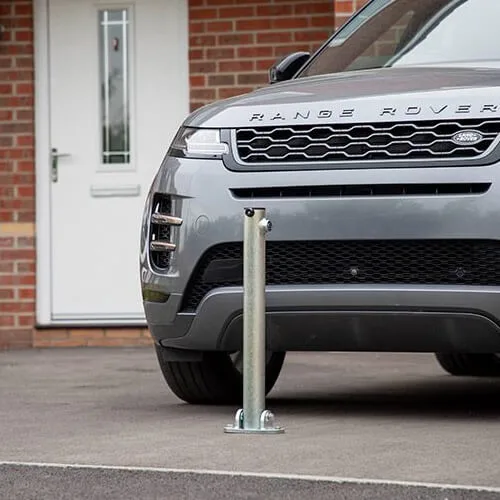
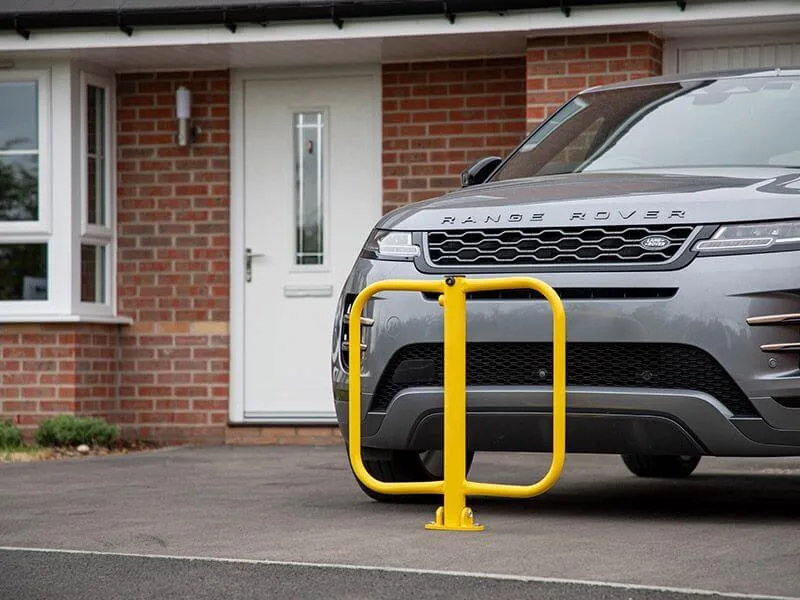
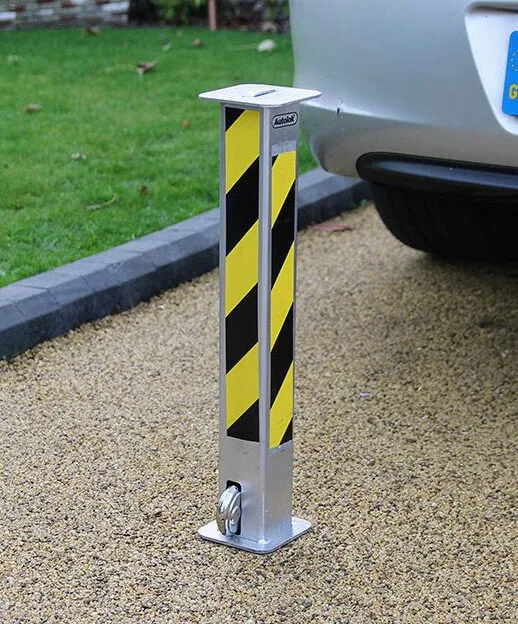
A dropped kerb only protects the road outside your drive. Parking on the drive itself is trespass, not a council matter: see our guide on whether it’s illegal to park on someone’s driveway. The simplest fix is driveway bollards: a lockable fold-down parking post such as the DriveGuard Park, from £310 fitted by expert local installers.
Frequently Asked Questions
Can you park across a dropped kerb?
Not where the council enforces parking, unless an exception applies. Section 86 of the Traffic Management Act 2004 bans parking next to a kerb lowered for pedestrians, cyclists or vehicles. Exceptions include the occupier (or someone they allow), deliveries of up to 20 minutes and emergency vehicles.
Am I allowed to park in front of my own dropped kerb?
Usually, yes: the law exempts the occupier, or someone with their unpaid consent. That doesn’t apply to a shared driveway, and yellow lines or permit zones still apply.
What should I do if my neighbour keeps parking over my dropped kerb?
Talk to them first. If it carries on, photograph it and report it to your council’s parking team each time, which can issue a penalty charge notice.
How much is the fine for parking across a dropped kerb?
In London it’s a higher-level penalty: £160 in Band A areas or £140 in Band B, halved if paid within 14 days. In England outside London, higher-level penalties are £70 or £60 depending on the council’s band, halved if paid early.
Can you put cones outside your house to stop people parking?
It’s not a good idea. Leaving anything on the highway that gets in the way of other road users can be an offence under section 148 of the Highways Act 1980. A parking post on your own drive is the legal way to keep it free.
Do I need planning permission for a dropped kerb?
You always need your council’s approval. In England, a new access onto a trunk road or a classified road needs planning permission too. Your council can tell you which applies.
This guide is general information, not legal advice. Rules and fees vary by council and can change, so check with your council for your street.
Sources
Rule 243 wording: The Highway Code, rules 238 to 252.
“MUST” and advisory rules: The Highway Code, introduction.
The dropped-footway law and its exceptions: Traffic Management Act 2004, section 86.
Enforcement areas and police enforcement: Department for Transport, statutory guidance on civil enforcement of parking contraventions.
London penalties and code 27: London Councils, parking and traffic charges and PCN contravention code list.
Penalty levels in England outside London: Civil Enforcement of Road Traffic Contraventions (England) Regulations 2022, schedule 3.
Enforcement on request and what counts (London): Royal Borough of Kingston, report illegal parking and Ealing Council, dropped kerb enforcement.
Shared driveways, applying for a dropped kerb: Southwark Council, dropped kerbs and driveways.
Enforcement on request (outside London): Medway Council, report an obstruction to a driveway.
Markings not needed for a ticket: Surrey County Council, access protection markings (H bars).
Cones and objects on the road: Highways Act 1980, section 148.
Applying and planning permission: GOV.UK, apply for a dropped kerb and General Permitted Development Order 2015, schedule 2, part 2, class B.
 Someone Blocking Your Driveway? Who to Call and What to Do
 Is It Illegal to Park on Someone's Driveway? UK Laws Explained
 Can I Put Bollards Outside My House? UK Regulations Explained
