
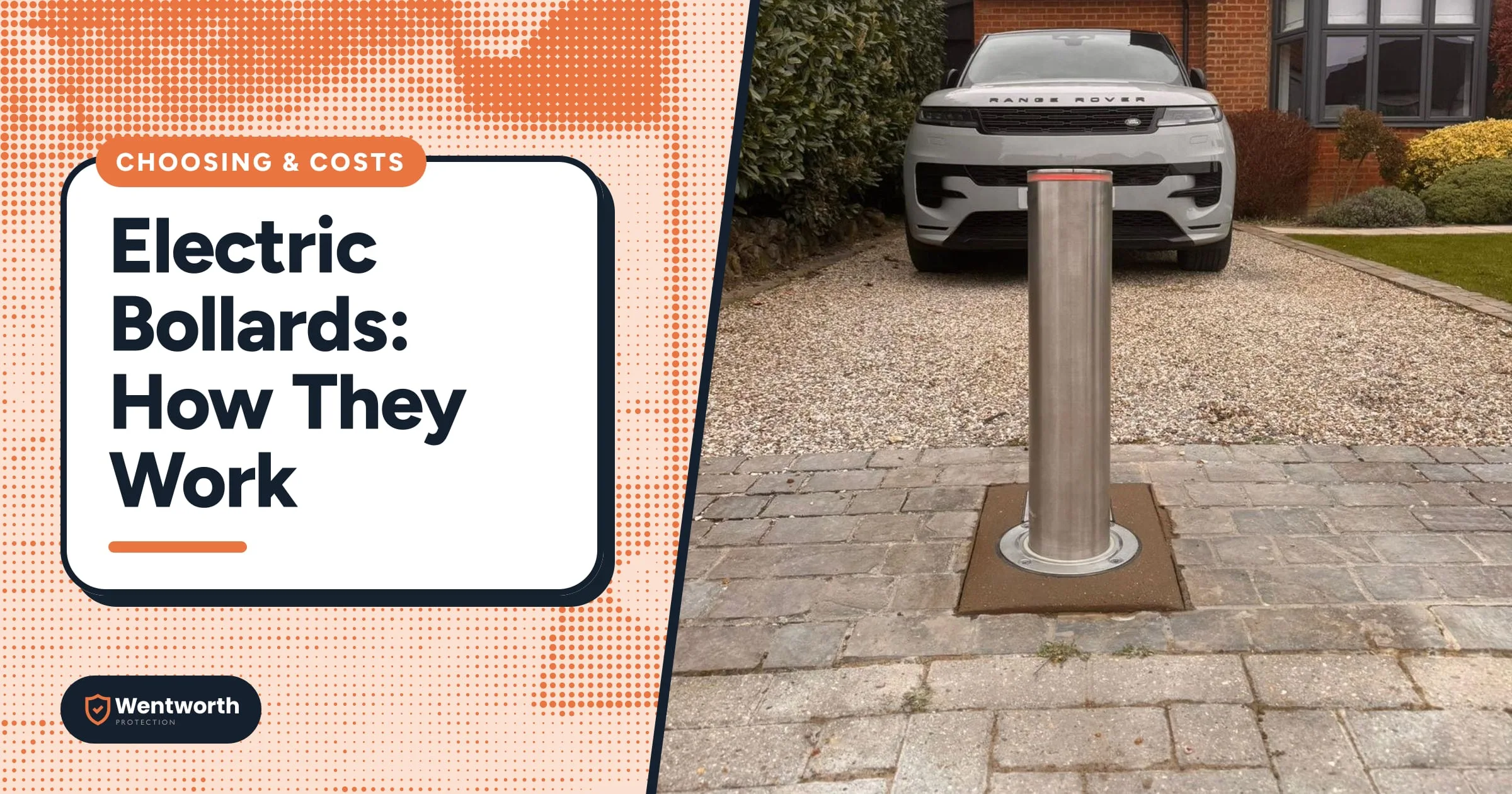
An electric bollard is a steel post with a motor that raises and lowers it when you press a fob, so you can close off your drive without getting out of the car. On a home drive it runs either from the mains, through a cable from the house, or from rechargeable batteries inside the bollard. You’ll also see electric bollards called automatic or rising bollards: they’re the same thing. This guide explains how they work, what fitting involves, what they cost and what tends to go wrong. To compare models and prices, see our automatic bollards, or every type in our driveway bollards range.
What is an electric bollard?
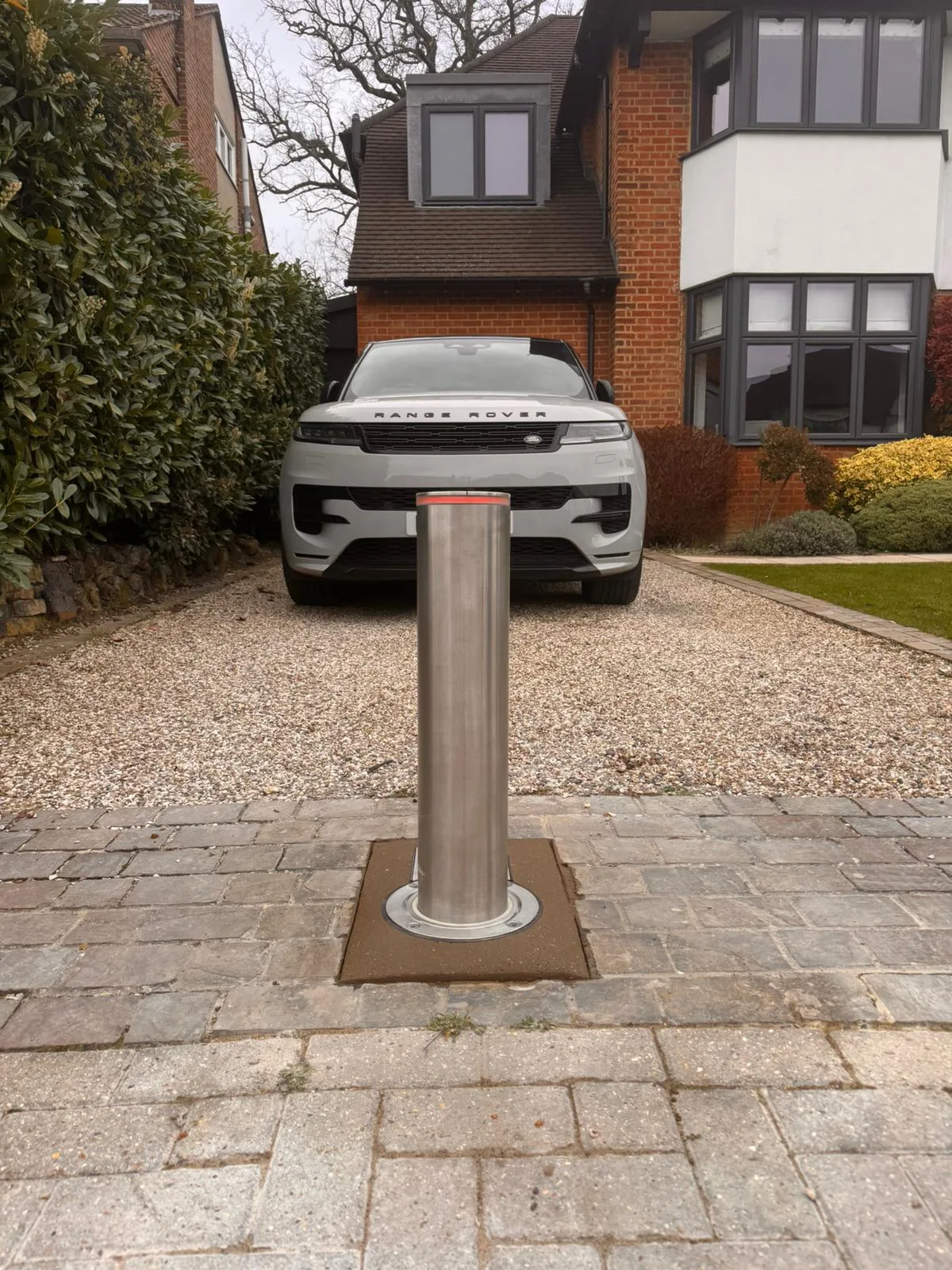
Raised, an electric bollard is a solid steel post in front of your car, so the car can’t be driven off the drive. Lowered, the post drops into a housing set in concrete below the surface and only its top shows. The difference from other bollards is simply who does the lifting.
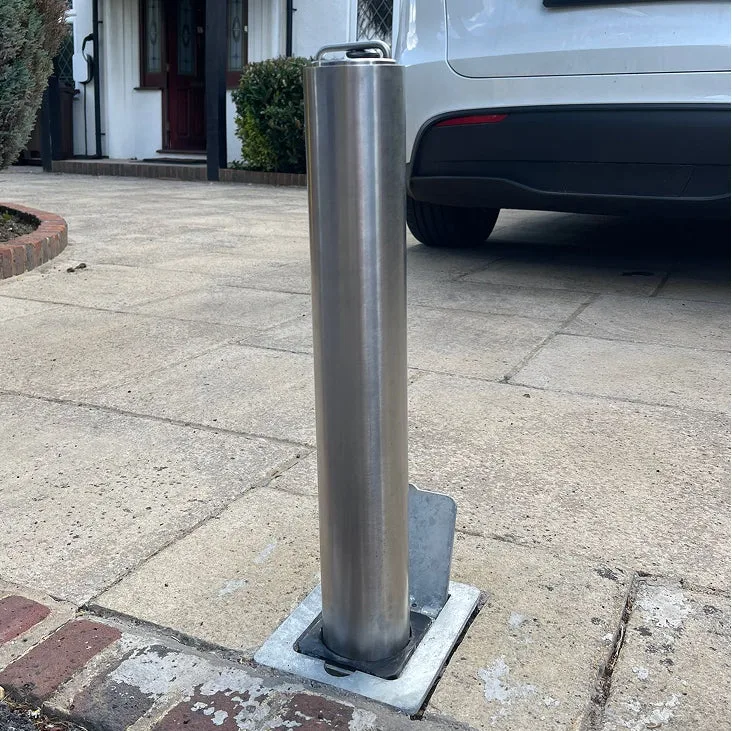
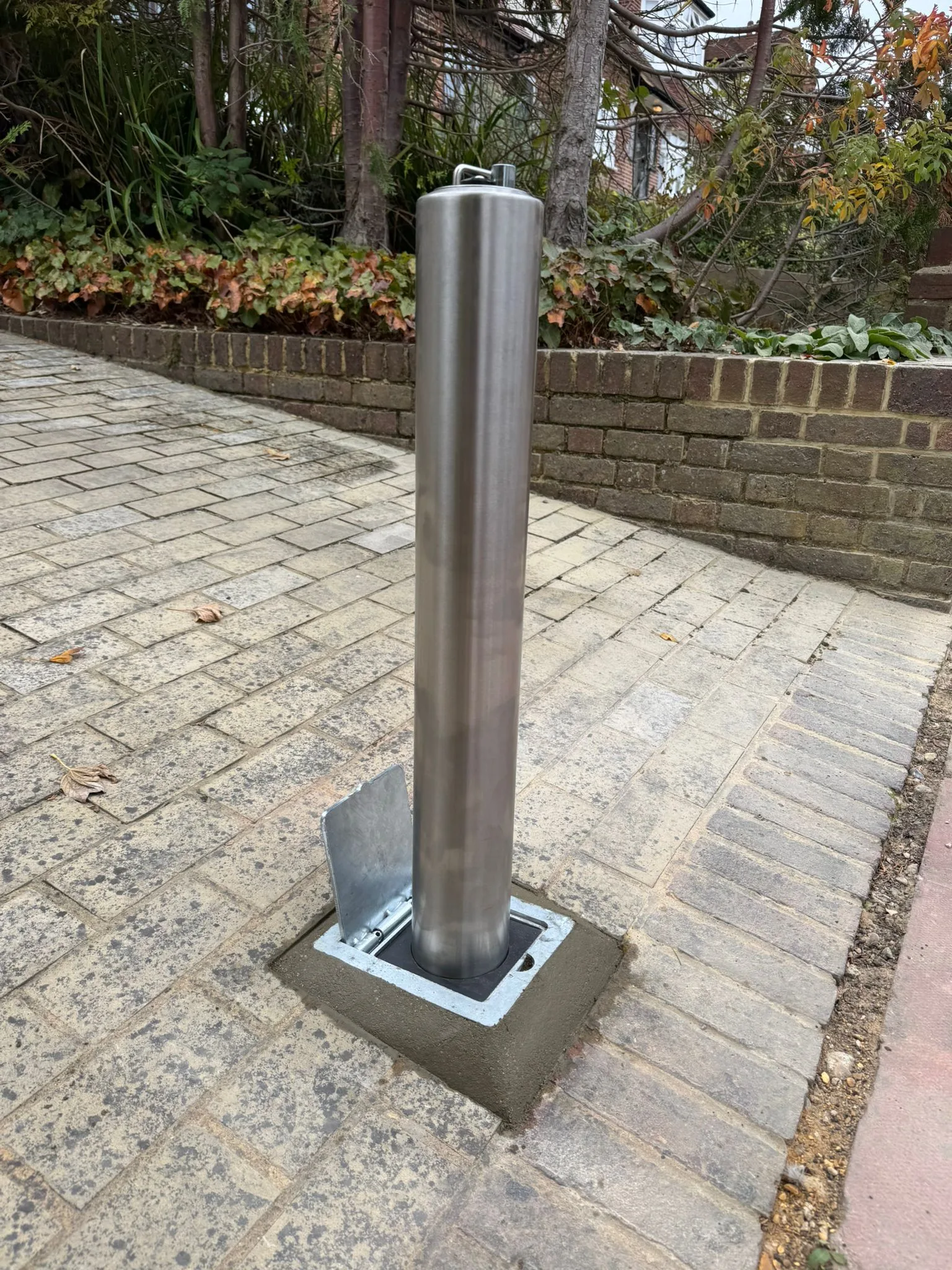
Manual telescopic bollard: you unlock it with a key, lift it until it locks upright, and lock it. Lowered, it sits flush inside its sleeve. See telescopic security bollards.
Lift-assist bollard: a telescopic post with a gas strut inside, so you only lift around 6–7kg. It needs no power. See lift-assist bollards.
Semi-automatic bollard: you unlock it with a key and a gas spring raises it; push it down and it locks itself. There’s no motor and no power supply, so it isn’t electric.
Electric (automatic) bollard: a motor does all the work. Press the fob and the post rises or lowers on its own.
For posts that lift out or fold flat, see our comparison of removable, telescopic and fold-down bollards.
How electric bollards work: electro-mechanical or hydraulic
There are two main ways an electric bollard moves its post.
Electro-mechanical bollards use an electric motor to drive the post up and down. BFT’s Stoppy B, which we sell as the BFT Stoppy Automatic Bollard, is one. BFT’s datasheet describes it as an automatic electromechanical bollard that runs on 230V mains, holds the post up with an electric brake, and is rated IP67.
Hydraulic bollards use a hydraulic pump to move the post. BFT’s own hydraulic models include one built for intensive use and a range for high-security sites. Hydraulic isn’t only for commercial sites, though: FAAC sells its hydraulic J200 bollard for homes too.
| Electro-mechanical | Hydraulic | |
|---|---|---|
| What moves the post | An electric motor and drive | A hydraulic pump |
| Example | BFT Stoppy B | FAAC J200 |
| In a power cut (example model) | BFT says the Stoppy B can be lowered by hand when the power is cut. An optional emergency unit keeps the post raised instead. | FAAC says the J200 locks in the raised position and is released with a special key. |
| Do we fit it? | Yes: the mains-powered BFT Stoppy | No |
We don’t fit hydraulic bollards. The two electric bollards we sell are the battery-powered DriveGuard Automatic and the mains-powered BFT Stoppy.
Battery or mains: what powers an electric bollard?
Battery-powered: DriveGuard Automatic
Our DriveGuard Automatic runs on rechargeable batteries inside the bollard. There’s no cable to run to the house, so there’s no trench across the garden and nothing to connect to your fuse box.
Power: two 24V 8000mAh rechargeable lithium-ion batteries.
Battery life: roughly 6 months per charge, depending on use.
Raising time: about 8 seconds.
Control: two short-range RF fobs.
Size and finish: 600mm high and 133mm across, in brushed 304-grade stainless steel.
Weather and visibility: IP67 waterproof, with an LED light crown so it’s easy to see at night.
Warranty: 12 months from installation.
Every DriveGuard Automatic comes with 2 fobs and 2 batteries. Battery life and raising time are typical figures and vary with use and temperature.
Mains-powered: BFT Stoppy
A mains bollard is wired to your home’s electricity through a cable laid in a protective duct under the drive. The BFT Stoppy Automatic Bollard runs on 230V mains and comes 500mm or 700mm high, 115mm or 200mm across, in anthracite or stainless steel. It comes with 2 fobs and a 36-month warranty, and our fitted price includes the wiring.
If the job needs a complete new circuit from your consumer unit, that’s notifiable work under the Building Regulations in England. The Planning Portal advises using an installer registered with a competent person scheme, who can certify the work; otherwise a building control body must be told before the work starts.
| Battery (DriveGuard Automatic) | Mains (BFT Stoppy) | |
|---|---|---|
| Cable to the house | None | Yes, in a duct under the drive |
| Regular job for you | Recharge the batteries, roughly every 6 months | None for power |
| In a mains power cut | Not affected: it isn’t on the mains | Depends on the model (see below) |
| Fobs included | 2 | 2 |
| Fitted price | £2,999 | From £5,999 |
| Best for | Most home drives, long drives, and block paving you’d rather not lift for a cable | Wide drives, private roads and parking areas |
What fitting an electric bollard involves
An electric bollard is a bigger job than a manual post, because the housing for the mechanism is larger than a telescopic sleeve. Ours are fitted by expert local installers, and the job runs like this.
Check the ground. Before digging, the installer checks what’s under the surface, including cables, pipes and drains, and plans the bollard’s position around them. For a mains bollard, that includes the route for the power cable.
Dig out for the housing. As an example of the scale, BFT’s datasheet gives the buried housing of the Stoppy B 115/500 as 965mm deep, in an excavation 800mm by 800mm and 1,200mm deep.
Add drainage. Water must be able to drain away from the pit (more on this below).
Run the power (mains only). The cable runs from your property to the bollard in a protective duct. The battery-powered DriveGuard needs no cable at all.
Concrete and make good. The housing is set in concrete, the drive is made good around it, and the installers take all the waste away.
Handover. The installer sets up your fobs and walks you through how it works.
For a step-by-step look at a manual installation, see our bollard installation guide.
How much does an electric bollard cost?
Electric bollards cost more than manual posts because there’s more to them: a motor, a power supply and bigger groundworks. Our fitted prices include VAT, digging, concrete, drainage, making good and a full clean-up, plus the wiring for mains models.
DriveGuard Automatic (battery): £2,999 for one, or £5,299 for two. With Klarna that’s 3 × £999.67 interest-free for one.
BFT Stoppy Automatic Bollard (mains): from £5,999.
Semi-automatic (gas spring, no power): from £4,999.
For comparison, a manual telescopic security post starts from £799 fitted and a lift-assist post from £1,499. Every price, including supply-only and multi-post totals, is in our bollard cost guide.
What goes wrong with electric bollards, and how to avoid it
Water in the housing
Any housing below ground can take on water, so drainage matters more than anything else. BFT Automation UK says drainage is essential for any automation below ground, especially in the UK climate. Its advice includes:
There’s no set size for a soakaway, because the amount of water depends on the site. A bollard at the bottom of a slope collects more than one on level or higher ground.
What matters is how fast water drains from the pit. BFT’s generic specification is 40 litres draining away in around 30 to 40 minutes.
In solid clay, water can sit for a long time.
Where the water table is high, water may sit in the pit at times of year. That’s when the bollard’s waterproof rating matters, and a sump and pump may be needed.
Every electric bollard we fit has drainage, and the DriveGuard Automatic is rated IP67 waterproof. Keep the top of the bollard clear of leaves and snow, and cover it before jet washing or building work on the drive.
Flat batteries
A battery-powered bollard needs charging. The DriveGuard Automatic’s batteries last roughly 6 months per charge, depending on use, and battery life varies with temperature. Note the date you charge them and set a reminder, so you recharge before they run low rather than after.
Fob range and lost fobs
The DriveGuard Automatic uses short-range RF fobs, so you operate it as you reach the drive, not from down the road. It comes with two fobs, so a second driver can have their own. Don’t leave a fob in the car: anyone who gets into the car would have the means to lower the bollard.
Power cuts
A battery bollard isn’t connected to the mains, so a mains power cut doesn’t affect it. With a mains bollard, it depends on the model. BFT says the Stoppy B can be lowered by hand when the power is cut, with an optional emergency unit to keep the post raised instead. FAAC says its hydraulic J200 locks in the raised position until it’s released with a special key. Before you buy, ask how your model behaves, and make sure you know what to do at handover.
Driving over the top
The DriveGuard Automatic spec sheet says never to drive over the top of the unit, even when it’s lowered. Agree the position with your installer before fitting, so it sits where your wheels won’t run over it.
People near the post as it rises
Position matters. Place the bollard clear of where people walk and where the car sits when parked, so it only ever rises into empty space. The DriveGuard Automatic’s LED crown and the BFT Stoppy’s reflective strip help people see the post at night.
Electric or manual telescopic: which suits you?
Raised and locked, both stop a car being driven off the drive. The difference is how they fit your day.
| Manual telescopic | Lift-assist | Electric | |
|---|---|---|---|
| How you raise it | Unlock with a key and lift | Unlock with a key; a gas strut helps | Press a fob from the car |
| Weight you lift | 6kg (Rhino RT/RD4) to 18kg (900mm RT/SS5) | Around 6–7kg | None |
| Power | None | None | Battery or mains |
| Fitted price from | £799 | £1,499 | £2,999 |
| Best for | Moving the car once or twice a day, at the lowest price | Daily use with far less lifting | In and out several times a day, mobility needs, or staying in the car |
Choose manual if you leave once in the morning and come back once in the evening, and lifting a post is no trouble. A heavy-duty Rhino RT/R8, certified Sold Secure Gold, suits high-value cars, 4x4s and vans. For more on the Marshalls Rhino range, see our Rhino bollards guide.
Choose electric if you’re in and out all day, if bending to a post is hard, or if you’d rather never get out of the car in the rain. A bollard only protects your car when it’s up, and one you raise with a fob is easy to raise every night.
Whichever you choose, every security bollard we fit comes with our Gold Guarantee: if thieves break through your Wentworth bollard to take your car within 36 months, we refund your installation in full.
Do you need planning permission for electric bollards?
Not usually, for a bollard on your own private driveway. Check with your council first if your home is listed or in a conservation area, or if the drive is shared or has a right of way across it. Bollards on pavements, verges or roads are on the public highway and need council permission. Our UK bollard regulations guide covers the details.
Frequently Asked Questions
Do you need planning permission for electric bollards?
Not usually, for a bollard on your own private driveway. Check with your council first if your home is listed, in a conservation area, or the drive is shared. Pavements, verges and roads are public highway and need council permission.
How much are automatic driveway bollards?
Our battery-powered DriveGuard Automatic costs £2,999 fitted for one, or £5,299 for two, including VAT and installation. The mains-powered BFT Stoppy Automatic Bollard starts from £5,999 fitted, with the wiring included.
Do electric bollards work in a power cut?
A battery-powered bollard like the DriveGuard Automatic isn’t on the mains, so a power cut doesn’t affect it. Mains bollards vary by model: BFT says its Stoppy B can be lowered by hand when the power is cut, while FAAC says its hydraulic J200 locks raised until released with a special key.
How long does the battery last on a battery-powered bollard?
The DriveGuard Automatic runs on two 24V rechargeable lithium-ion batteries, which last roughly 6 months per charge, depending on use. Battery life also varies with temperature.
Are electric bollards hydraulic?
Some are. Electric bollards are either electro-mechanical, where an electric motor drives the post, or hydraulic, where a hydraulic pump moves it. We fit the battery-powered DriveGuard Automatic and the electro-mechanical BFT Stoppy, not hydraulic models.
Can I swap my manual bollard for an electric one?
Yes, but it replaces the telescopic sleeve rather than fitting into it, because an electric bollard needs a larger housing and drainage, and a power supply for mains models. The old post can be removed and the electric bollard fitted in its place.
Sources
DriveGuard Automatic and BFT Stoppy Automatic Bollard specifications and prices: Wentworth Protection DriveGuard Automatic spec sheet (October 2026) and our product catalogue. Prices on this page update automatically from our shop.
Stoppy B power supply, electric brake, IP67 rating, power-cut behaviour and housing size: BFT, Stoppy B 115/500 and 200/700 product datasheet.
BFT’s electromechanical and hydraulic bollard ranges: BFT range of bollards.
FAAC J200 hydraulic bollard, residential use and power-cut behaviour: FAAC UK, J200 automatic bollards.
Drainage and soakaways for automatic bollards: BFT Automation UK, drainage and soakaway information (PSI/Bol/001).
Notifiable electrical work in England: Planning Portal, Building Regulations: electrics, general information.
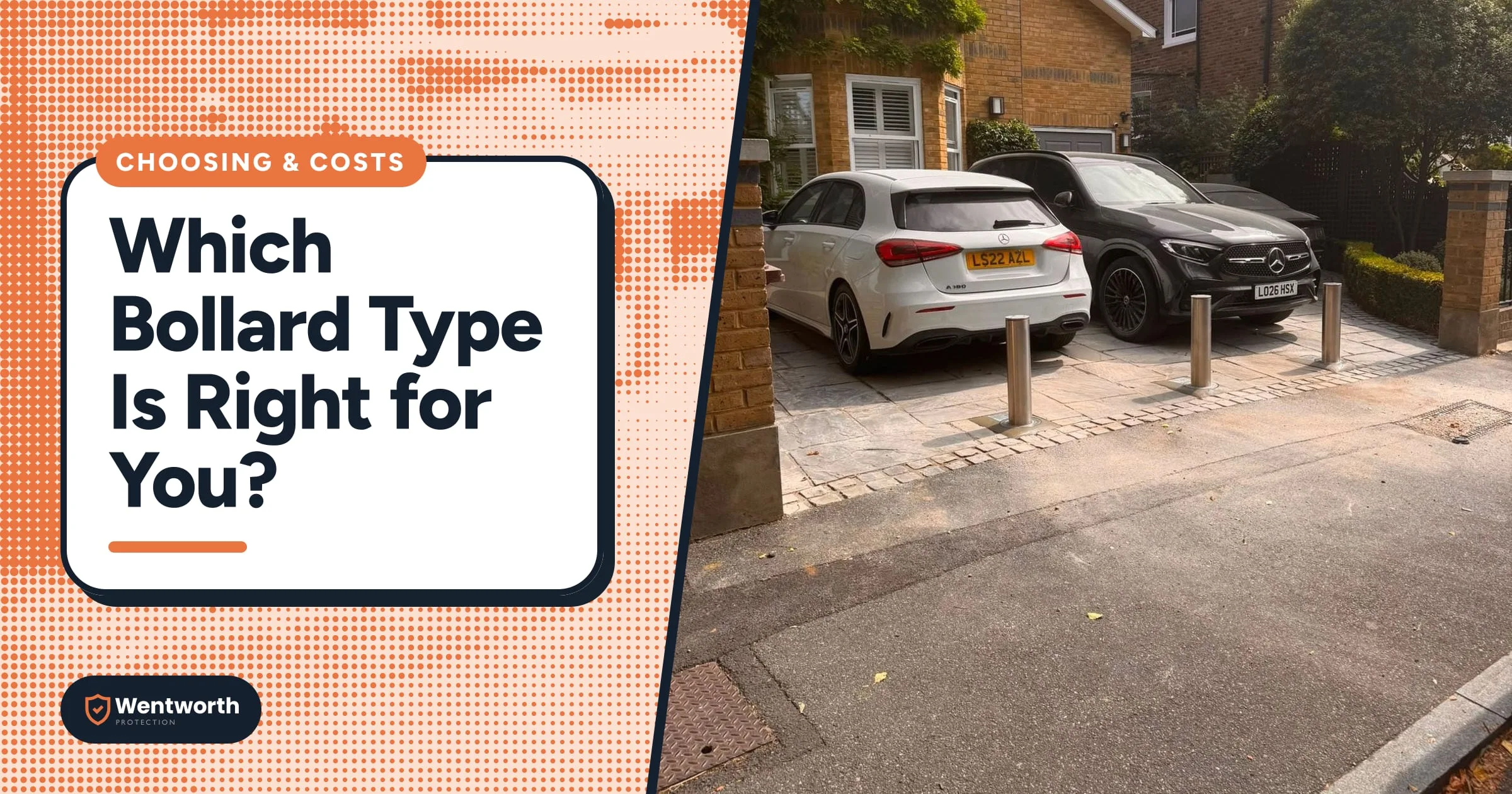 Removable vs Telescopic vs Fold-Down Bollards: Which Should You Choose?
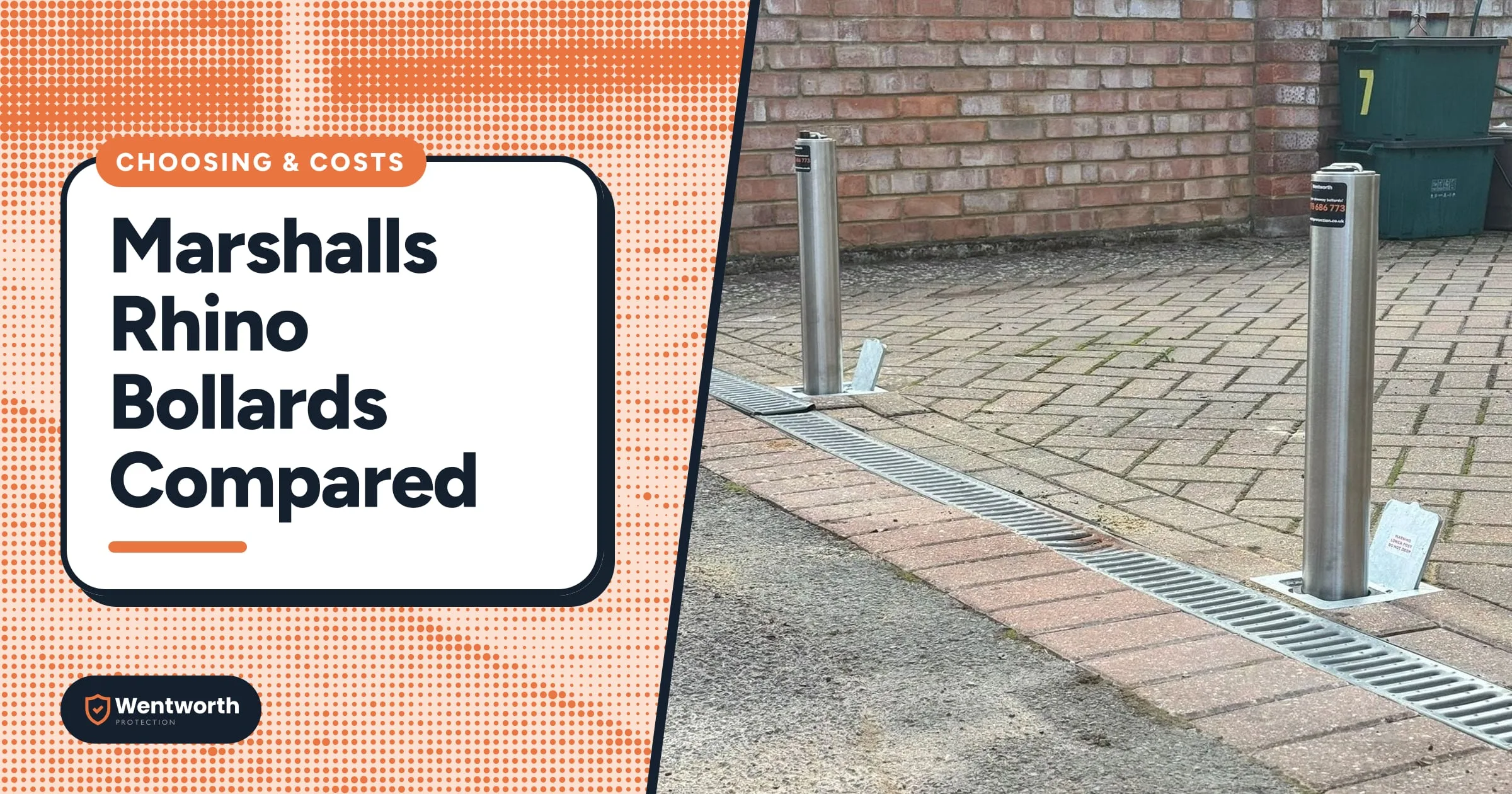 Marshalls Rhino Bollards: Every Model Compared
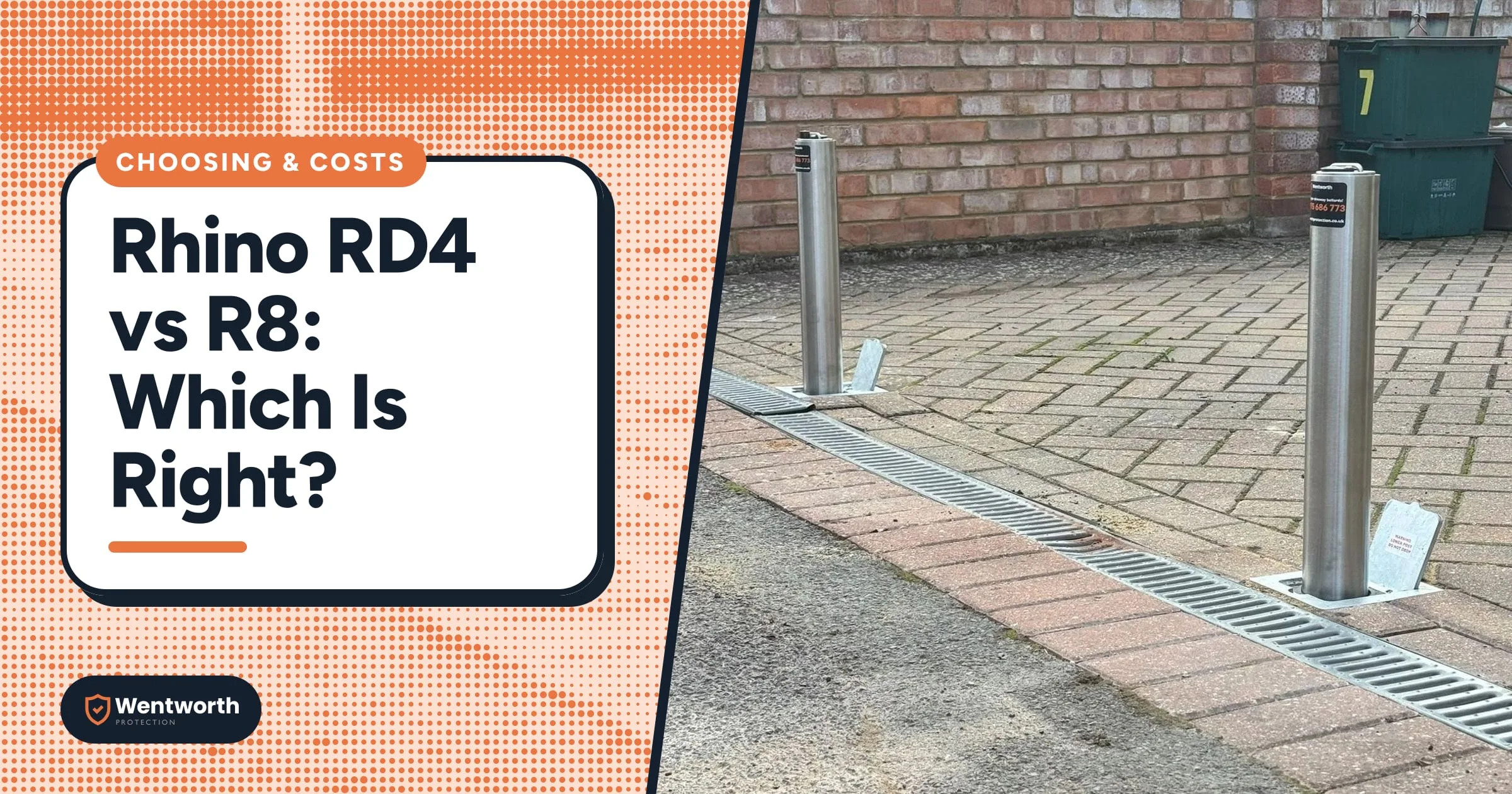 Rhino RT/RD4 vs RT/R8: Which Telescopic Bollard Should You Get?
