What makes a driveway bollard secure?
Three things decide how hard a bollard is to beat: the steel, the lock and how it’s fitted. Look for thick-walled steel, a lock that resists picking and drilling, and products tested by an independent body such as Sold Secure.
Fitting matters just as much. A strong post in a shallow hole can be levered out. Ours sit in a steel sleeve set deep in concrete, so the weak point isn’t the ground.
Telescopic or automatic: which is right for you?
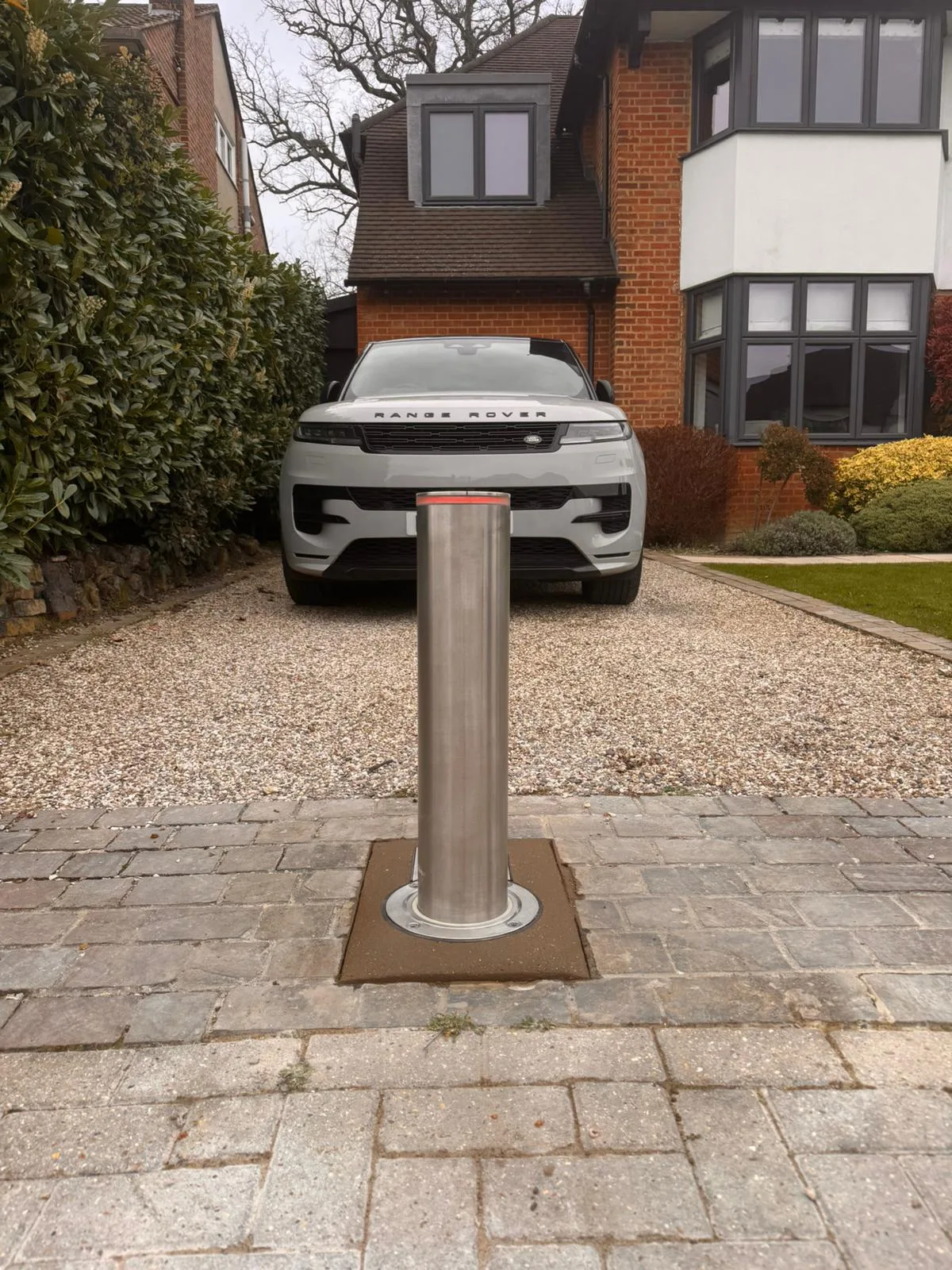
A telescopic bollard is the most popular choice. You unlock it, lift it up and it locks in place. Lower it and it sits flush with the drive. It’s the best value, but you do lift it by hand each time.
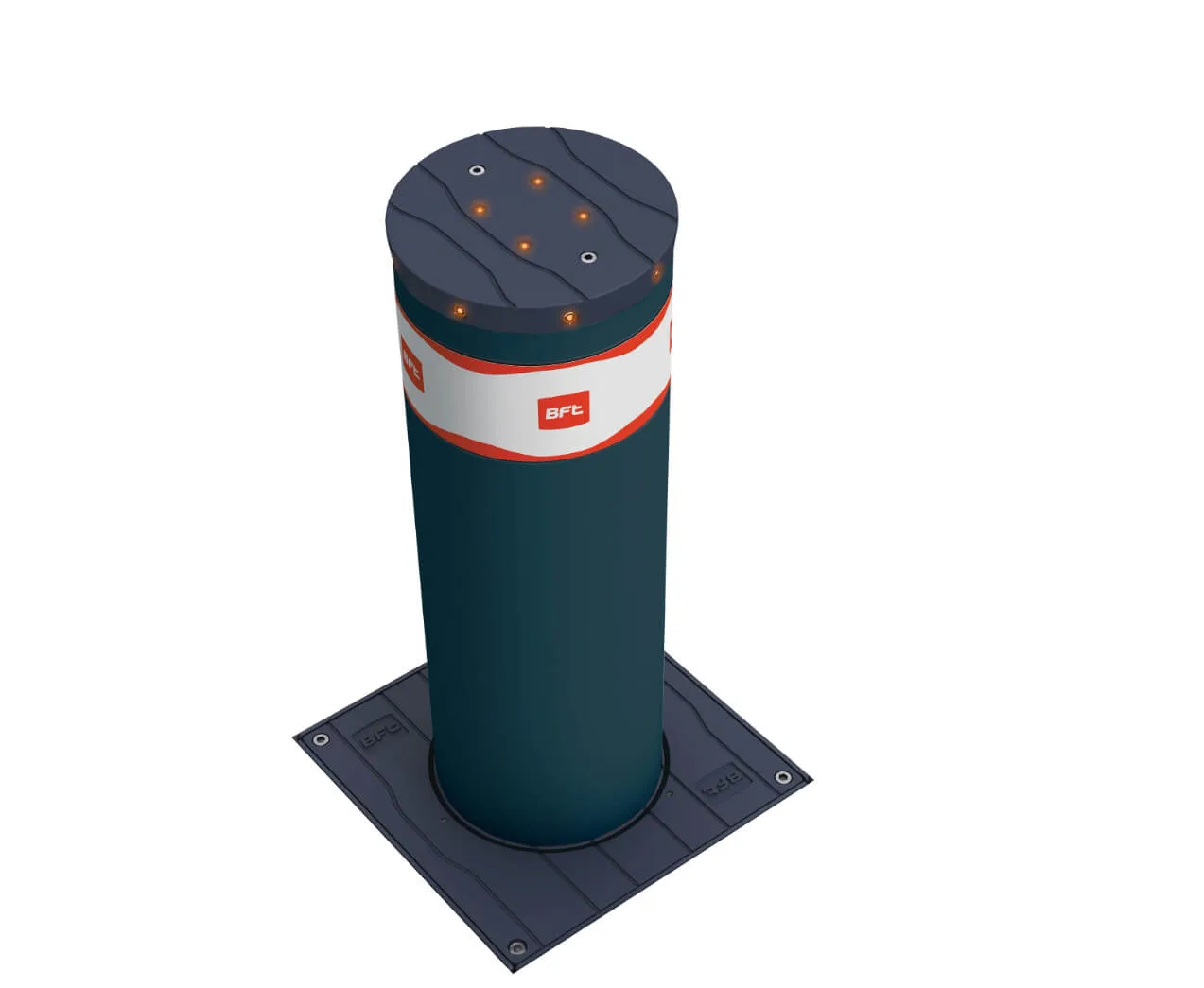
If you use the drive several times a day, or lifting is a struggle, look at lift-assist (a gas strut takes most of the weight) or automatic (press a button and it rises on its own). Automatic costs more, but it’s the easiest to live with, and our battery-powered DriveGuard needs no cable to the house.
How deep does a driveway bollard go?
Most telescopic bollards need a hole around a metre deep for the sleeve the post drops into, set in concrete. We also add drainage at the bottom so rainwater drains away instead of sitting inside, where it could freeze and jam the post.
That’s why we check what’s under your drive before we dig: cables, pipes and drains all change where a bollard can go.
Telescopic, fold-down, removable or fixed: the types explained
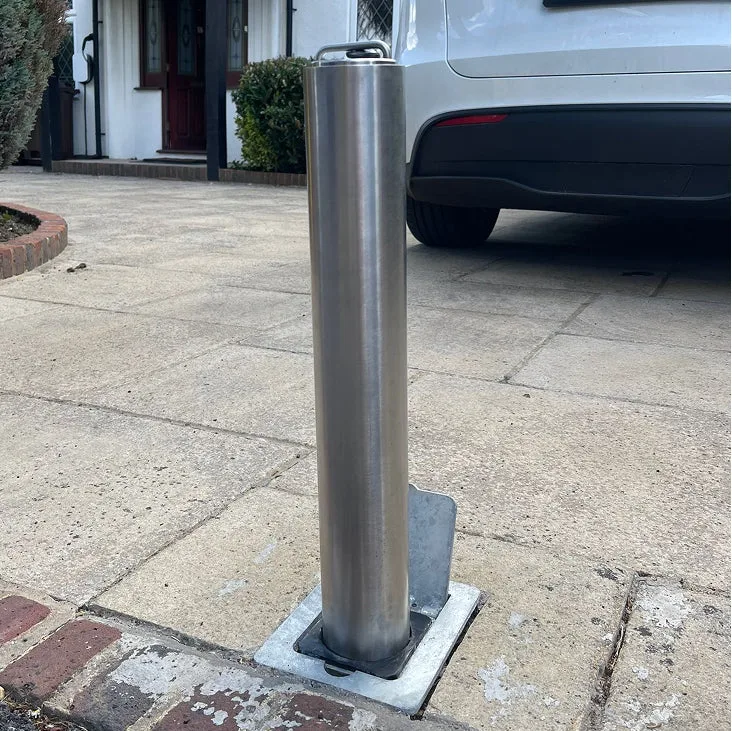
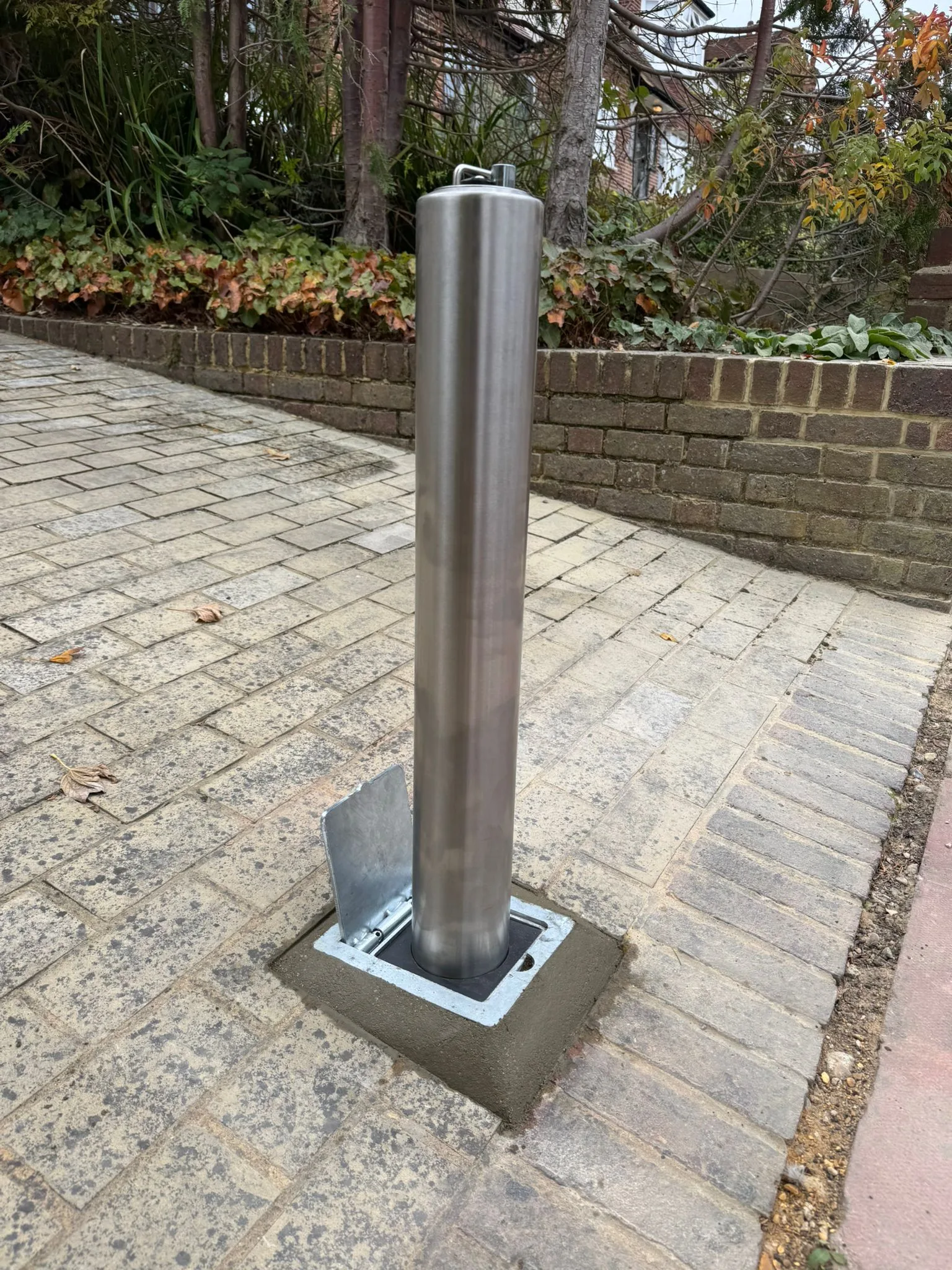
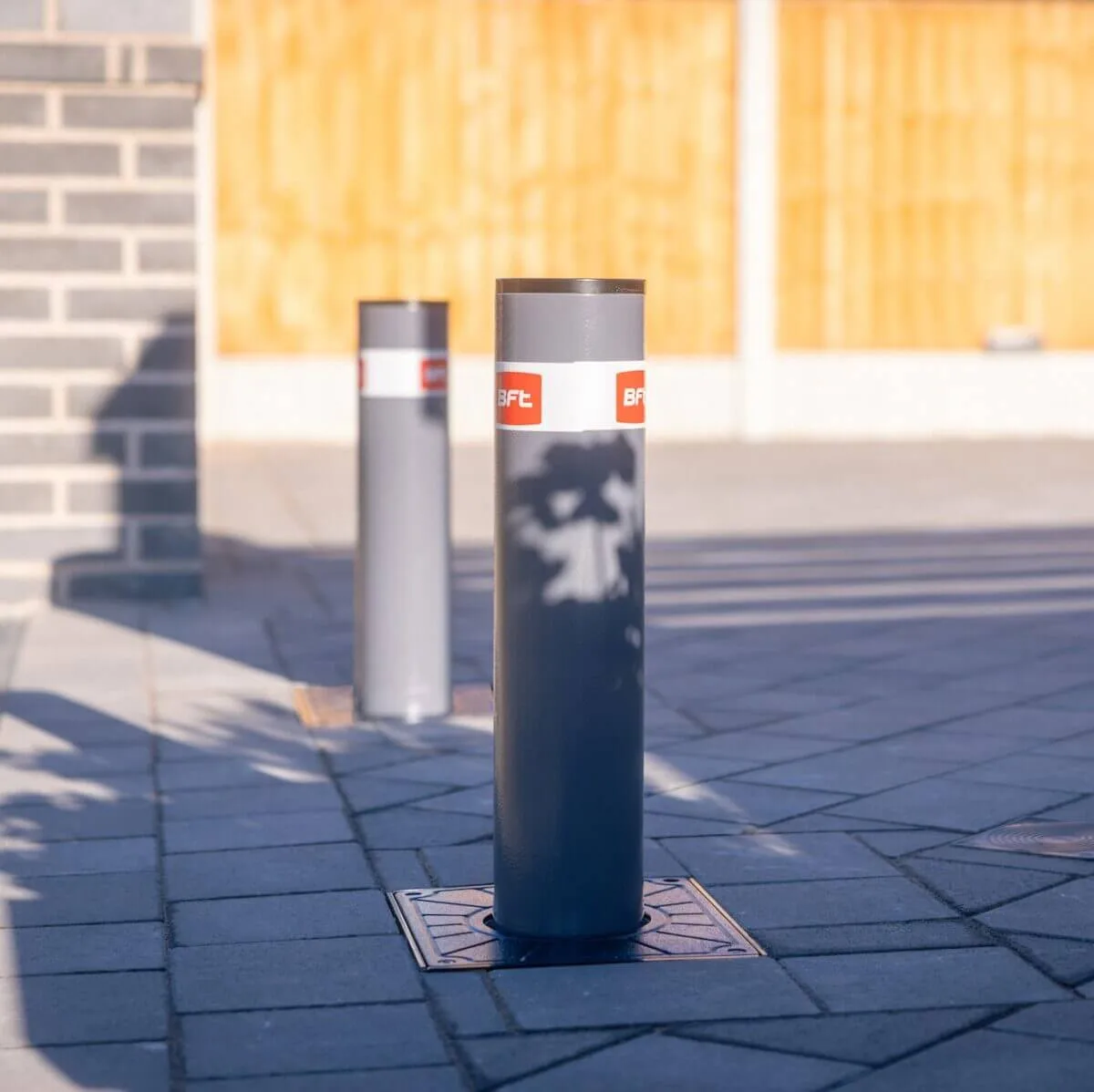
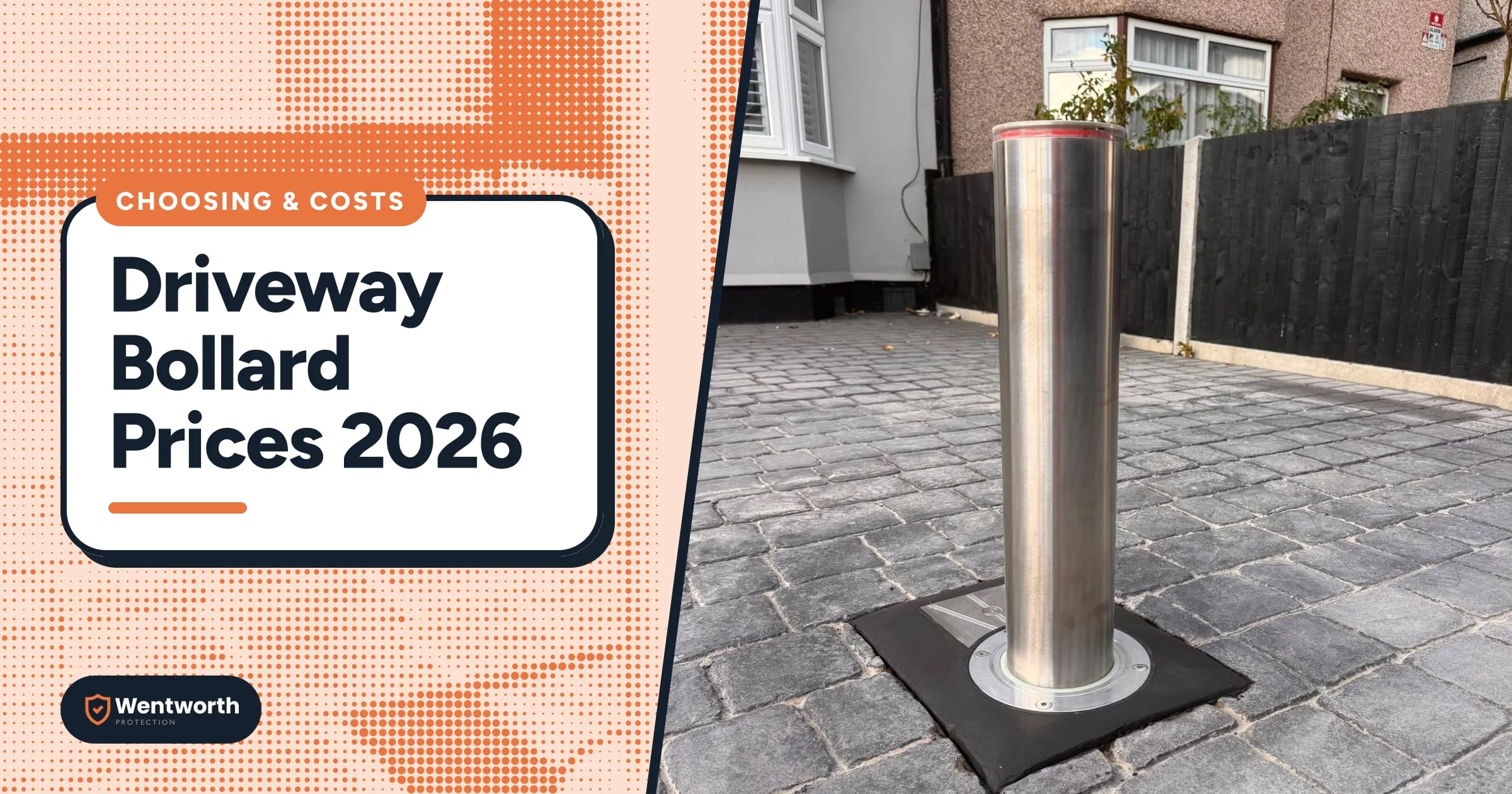
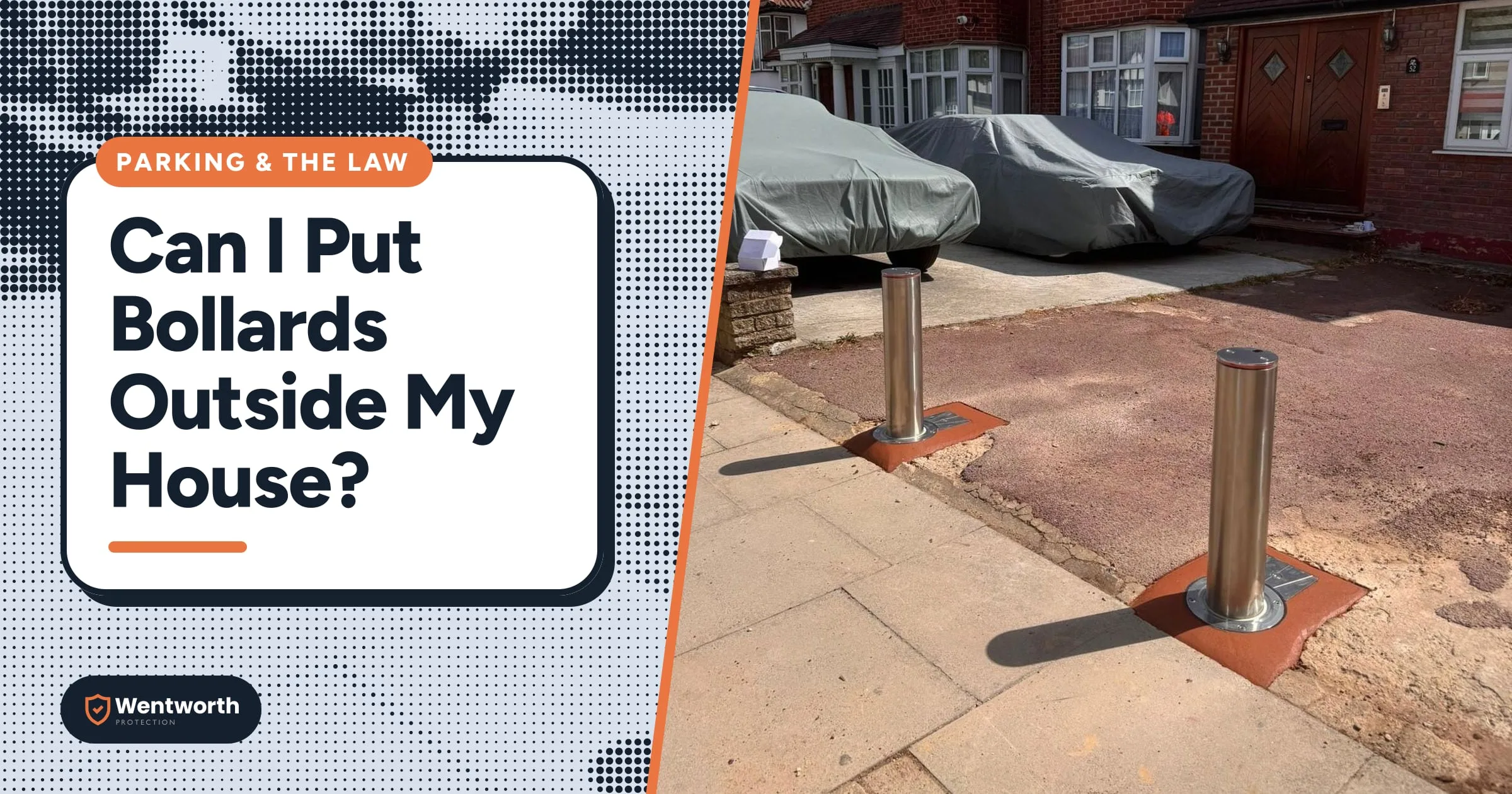
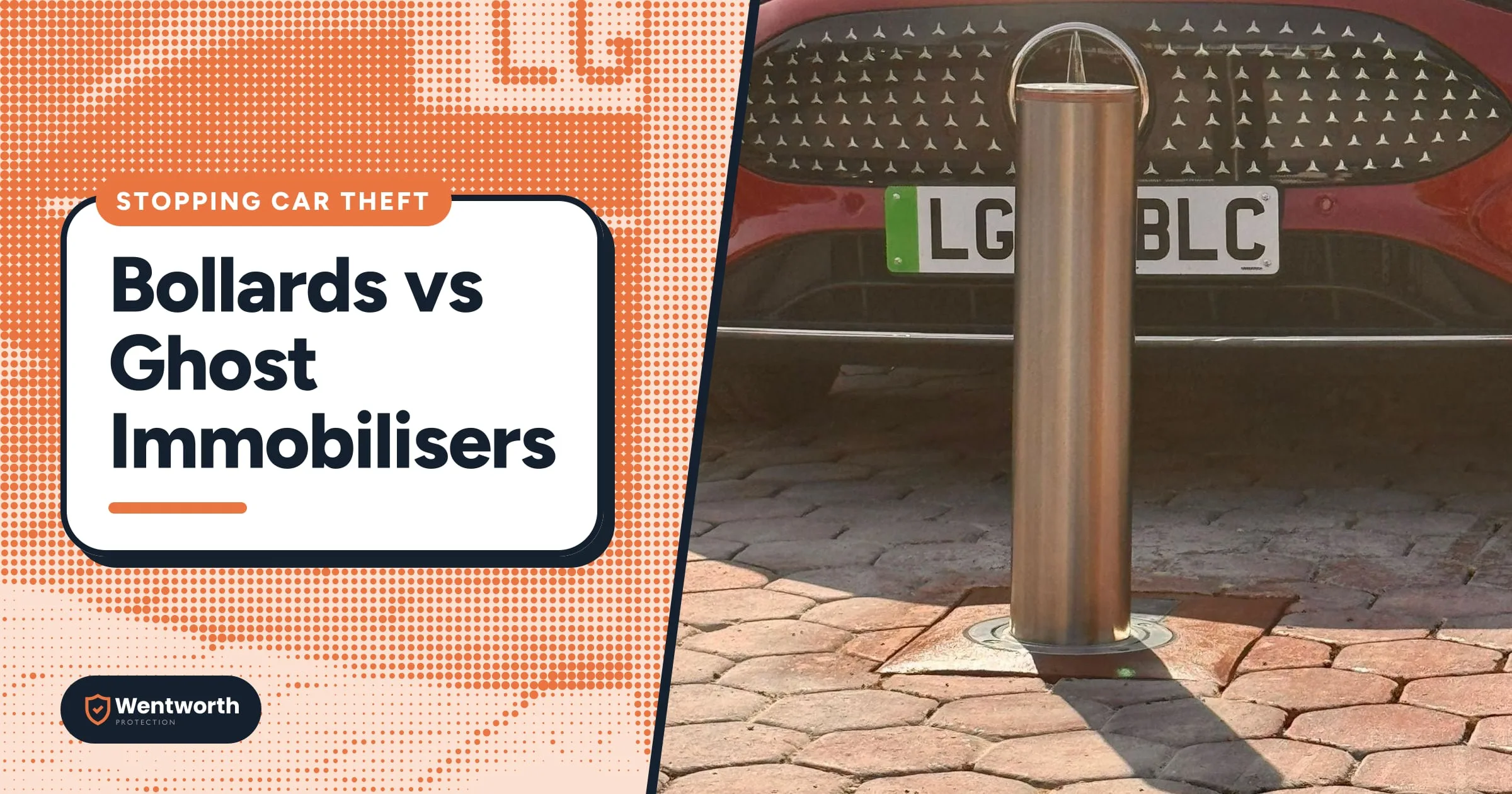
Telescopic (retractable) bollards drop into a sleeve in the ground and sit flush when lowered. They’re the best all-round choice for homes because there’s nothing left on the drive when you want to park or drive out.
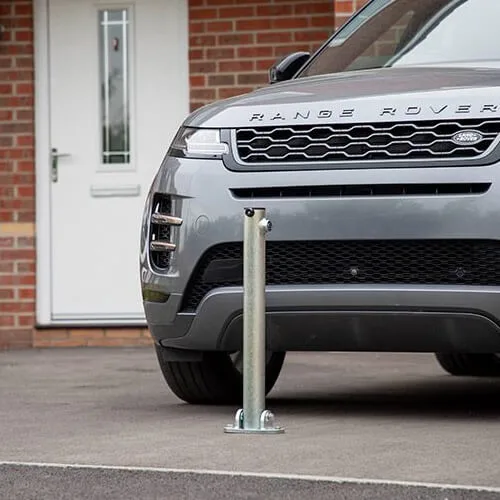
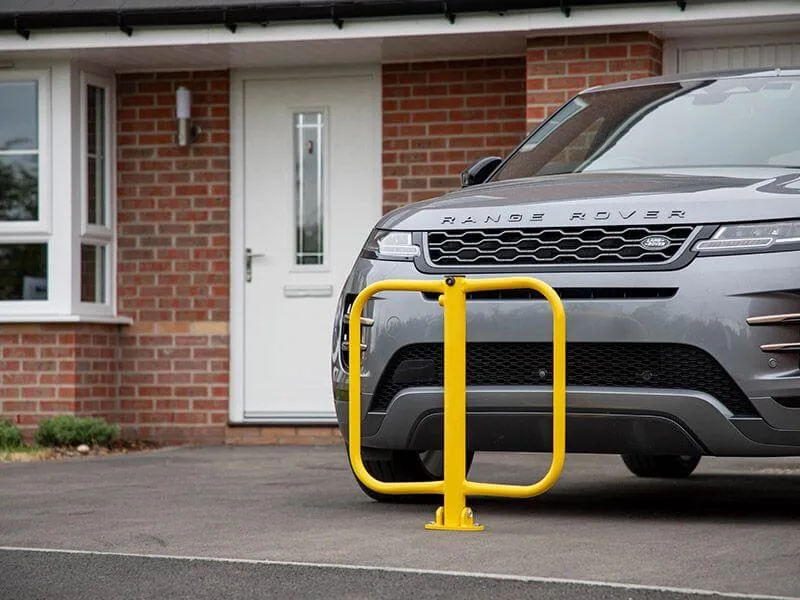
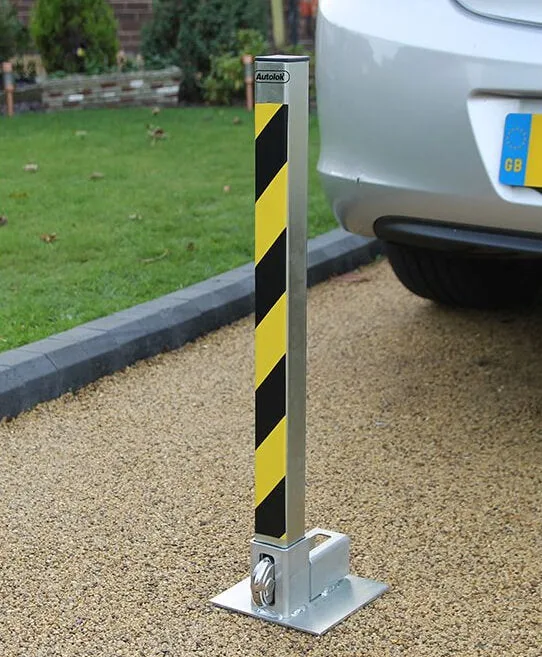
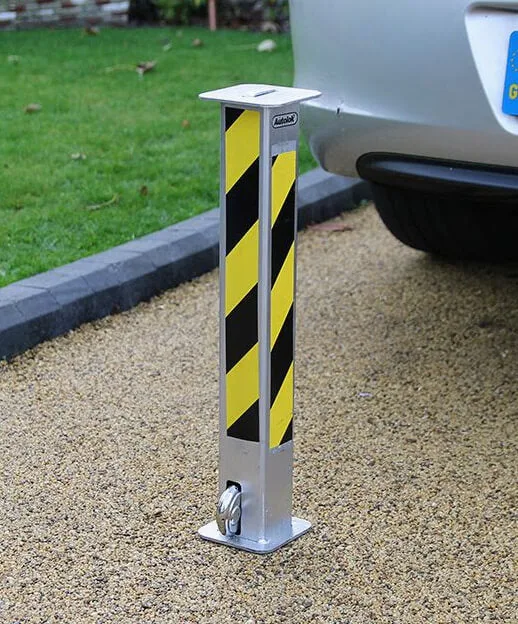
Fold-down posts hinge flat on a base plate. They’re quick to use and good value, which makes them ideal for stopping people parking, but the folded post stays on the surface.
Removable (lift-out) posts lift completely out of a socket in the ground. They’re simple, but you have to carry the post and store it somewhere every time.
Fixed (static) and concrete bollards stay up for good. They suit car parks, shopfronts and public spaces, not a drive you use every day, so we don’t fit them on driveways.
What size driveway bollard do I need?
Height matters more than most people think. A 500mm post suits most hatchbacks and saloons. For SUVs, 4x4s and vans with high ground clearance, go taller: our posts come in heights up to 900mm, so a thief can’t simply drive over the top.
Diameter and wall thickness decide how much force the post can take. Standard posts suit most cars; heavy-duty posts use thicker steel for heavier vehicles. Tell us what you drive and we’ll match the post to it.
Where should a driveway bollard go?
A bollard works by blocking the only way out. We usually place it close to the front or back of the car, in the path it would need to take to leave the drive, so the car can’t be steered around it.
On a wide or open drive, one post may leave a gap. Two posts close it. If you’re using bollards side by side, keep the gaps narrower than a car (under about 1.5 metres) so nothing can squeeze through. There’s no legal spacing rule for private driveways; in public spaces, councils follow accessibility guidance that leaves room for wheelchairs and buggies.
Which driveway surfaces can you fit a bollard into?
Almost any. We fit bollards into block paving, tarmac, concrete, resin and gravel. On block paving we lift and relay the blocks around the post. On tarmac, concrete and resin we cut a neat opening and make good around the sleeve, so it looks like it was always there.
If your drive is newly laid, or you’re having one laid soon, tell us. It’s often easiest to fit the sleeve before or during the work.
Do I need a security bollard or a parking post?
Ask yourself what you’re trying to stop. If it’s someone stealing your car, you need a driveway security post: thicker steel, a stronger lock and a sleeve set deep in concrete.
If it’s someone parking on your drive or in your space, a parking post is enough, and it costs less. Parking posts start from £310 fitted; security posts start from £799.
Looking after your driveway bollard
Telescopic bollards need very little care. Keep the sleeve clear of leaves and grit, and give the lock a drop of lubricant a couple of times a year so the key always turns smoothly. Rain does get into the sleeve, but our drainage layer lets it drain away rather than sit there, so the post doesn’t freeze in place in winter.
Automatic bollards have moving parts and a motor, so they benefit from a regular service. Our DriveGuard Automatic comes with servicing included.
Choosing a finish: galvanised, powder-coated or stainless
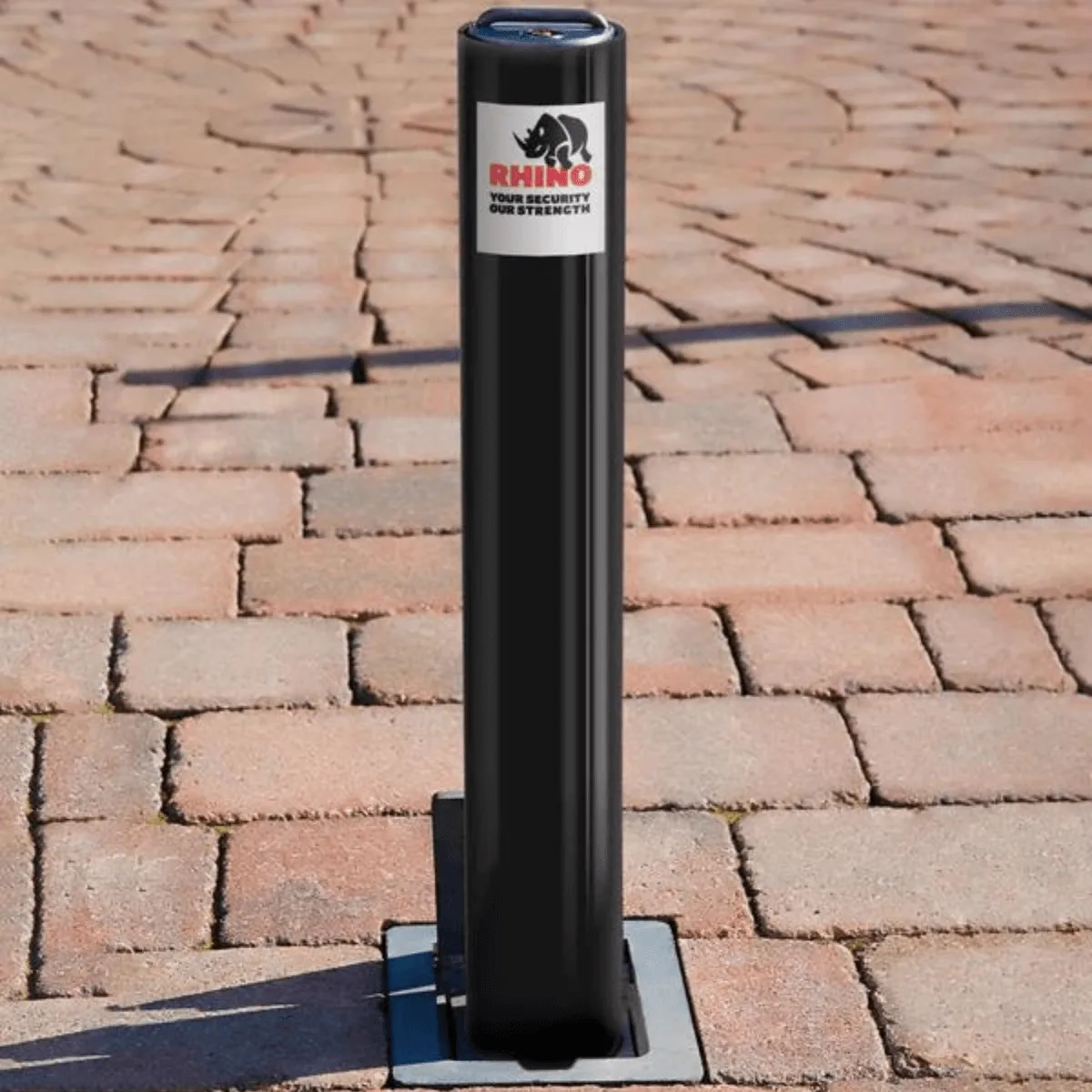
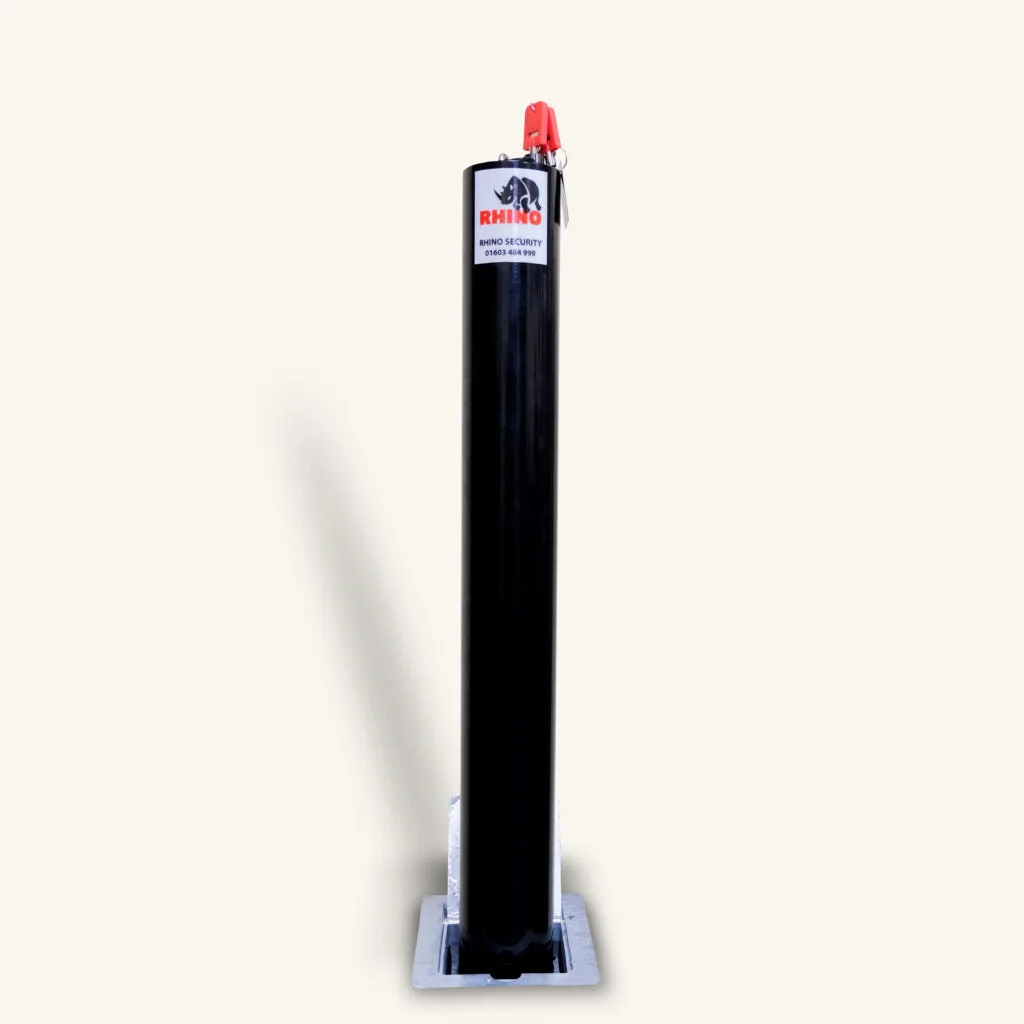
Galvanised steel is hard-wearing and great value. Powder-coated steel comes in five colours, so your post can match your front door, windows or gates. Brushed stainless steel suits modern drives and keeps its look for years.
For the heaviest-duty posts, colour is about more than looks: a bright high-vis post is easier to see at night, for you and for anyone visiting.
Can a driveway bollard stop a 4x4 or SUV?
Yes, if you choose the right one. Larger vehicles are heavier and sit higher, so they need a taller post and thicker steel. That’s exactly what our heavy-duty bollards are for, from £949 fitted.
To be clear, a driveway bollard isn’t a crash-rated barrier of the kind used outside government buildings. It’s built to stop a thief quietly driving your car off the drive, and that’s how most cars are stolen from homes.
Living with a bollard: visitors, deliveries and bins
A bollard only protects your car when it’s up, so it needs to fit into your day. Lower it when visitors arrive or a delivery van needs to reverse in, and raise it again when you’re parked for the night.
If you’re in and out several times a day, lift-assist makes raising the post a one-handed job, and automatic means you never get out of the car. Our DriveGuard Automatic comes with two remotes.
Do I need planning permission?
Usually not, for a bollard on your own private driveway. Check with your council first if you live in a listed building or a conservation area, or if the drive is shared or has a right of way across it.
Can I fit a driveway bollard myself?
You can buy a bollard on its own, but fitting one properly means digging a deep hole through your drive, setting the sleeve level in concrete, adding drainage and making good the surface around it. A badly set sleeve is the easiest way for a thief to beat a good bollard.
Our fitted price covers all of that, plus our Gold Guarantee.